
Reviewed · KEELUNG SHORE EXCURSIONS
Private Keelung Cultural Walk: Markets, Streets & Local Life
Keelung makes a strong first impression with its port, wet streets, temples, and food stalls, but this walk takes you past the obvious sights. You’ll enter a Chenghuang temple, pass through Columbus Alley and a bomb shelter, then see how Ren’ai Market and Miaokou Night Market fit into daily life. The local stories are the real attraction.
I like the private format, which lets the guide adjust the pace and explain what catches your eye. I also like the bilingual local team, with guides such as Mila, Annie, Ilun, and Benny bringing different parts of Keelung’s past and present into the walk. The main consideration is weather: the tour requires good conditions, and Keelung is known for rain, so keep your schedule flexible.
Key points to know before booking
- A port-city introduction in three hours: The walk links temples, wartime sites, markets, and folk beliefs without requiring a full day.
- Private for up to six people: Your group stays together, and the route can respond to your interests.
- A bilingual local guide: The team leads in English and Mandarin, with Mila, Annie, Ilun, and Benny named among the guides.
- Markets are central, not decorative: Ren’ai Market shows daytime routines, while Miaokou offers a different look at Keelung’s food and religious life.
- A useful cruise-port outing: The meeting point is at Keelung Customs Office, close to the port and public transportation.
- Plan around the rain: Poor weather can lead to a new date or a full refund, and changes made within 24 hours are not accepted.
Why Keelung deserves more than a quick port stop
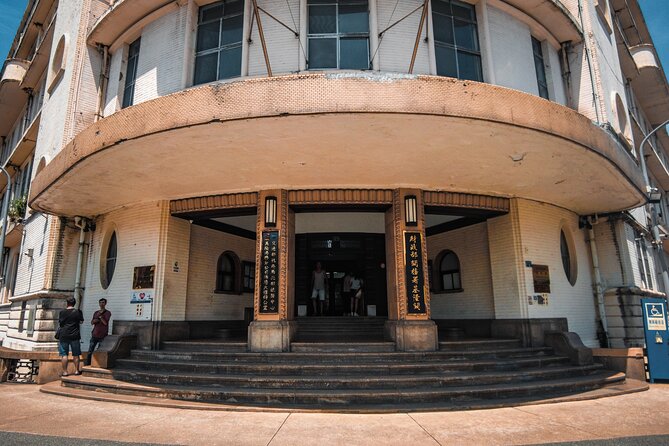
Keelung sits beside the harbor and within easy reach of Taipei, yet it has a personality all its own. Its streets connect maritime trade, migration, temples, markets, wartime shelters, and ordinary services such as food shops and massage businesses.
That mixture is what makes this walk worthwhile. You are not simply checking off a temple and a market. You are seeing how religious customs, food traditions, and the city’s difficult wartime past still occupy the same few blocks.
The tour lasts about three hours. The listed stops account for roughly two hours, leaving time for walking between them, asking questions, and allowing the guide to adjust the route. That is a sensible length for a first look at Keelung, especially if you are visiting from Taipei or have a few hours before returning to a ship.
The meeting point is Keelung Customs Office at No. 6, Gangxi Street, in Ren’ai District. It is close to Keelung Port, so the tour can work well for a port call. Pickup is offered, but you should confirm exactly what pickup means for your booking rather than assume the guide will collect you anywhere in Taipei.
More shore excursions from Taipei:
- Full-Day Private Custom Keelung Shore Excursions
★ 5.0 · 123 reviews - Keelung Shore Excursion: Jiufen & Shifen Sky Lantern Private Tour
★ 5.0 · 75 reviews - Keelung Shore Excursions: Private 6-Hour Taipei City Adventure!
★ 4.5 · 57 reviews
Starting at Chenghuang Temple and the Nanguan music hall
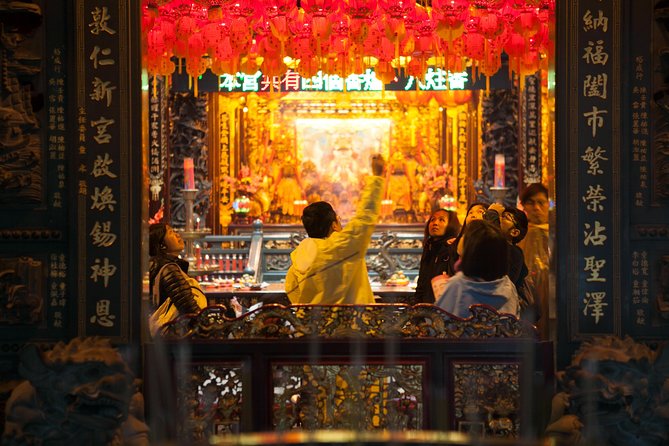
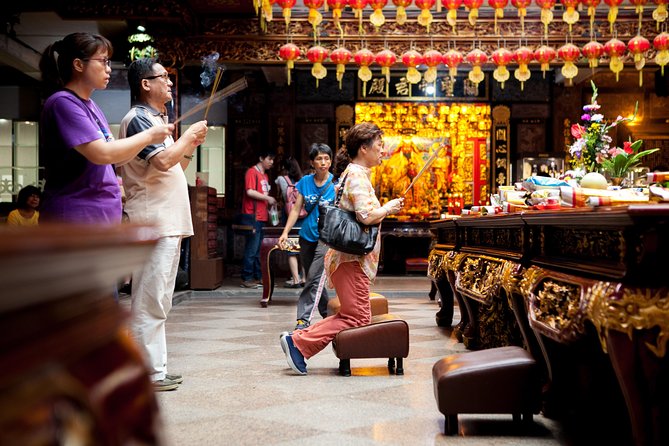
The first stop, Keelung Chenghuang Temple, introduces the religious side of the city. Chenghuang temples are associated with City God beliefs, linking local worship with ideas about protection, justice, community, and the spirit world.
You will also visit the Nanguan music hall. The important point here is not only the building itself, but the living tradition connected to it. The tour is designed to show how people in Keelung still follow older customs rather than presenting them as museum pieces.
Allow about 20 minutes at this stop. That is enough for an introduction and some questions, but not enough for a long architectural study. I would approach this part with curiosity and respect. Temples are active places of worship, so your guide’s explanation will help you understand what you are seeing without treating the space like a stage set.
This is a good opening because it gives the rest of the walk a cultural frame. Later, when you pass food stalls or market businesses, you can better understand why temples remain part of the city’s social life.
Columbus Alley and the bomb shelter
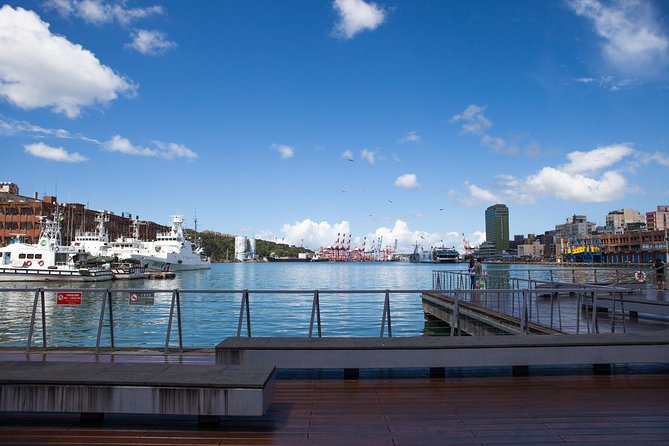
The second stop moves into Ren’ai District and toward Columbus Alley and a bomb shelter. This is where the walk shifts from religious tradition to the physical traces of Keelung’s complicated past.
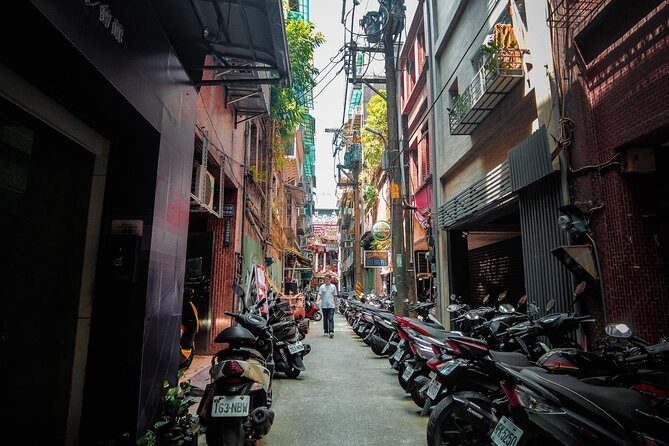
A narrow alley can tell you a lot about a city. It shows how people move through older neighborhoods, how buildings meet one another, and how small routes survive beside larger streets. Columbus Alley is not presented as a grand attraction. Its value is in seeing a part of Keelung you might pass without noticing.
The bomb shelter adds a more serious layer. Keelung’s location as a major port made it important, and that importance brought danger as well as trade. A shelter tucked into an ordinary district helps connect broad historical events with the places where residents actually lived.
This section lasts about 40 minutes, making it the longest single stop. That gives the bilingual guide time to explain the setting and answer questions. The quality of this part depends heavily on the guide, which is one reason the local team matters. Mila and Annie are among the guides associated with the walk, while Ilun and Benny have also led Keelung experiences.
The route is not a polished parade of famous monuments. You may find the alleys and shelter more interesting precisely because they feel like parts of the working city. If you want grand views or major museum interiors, this is not that kind of tour. If you want context for Keelung’s streets, it fits well.
Ren’ai Market, where daily life takes over
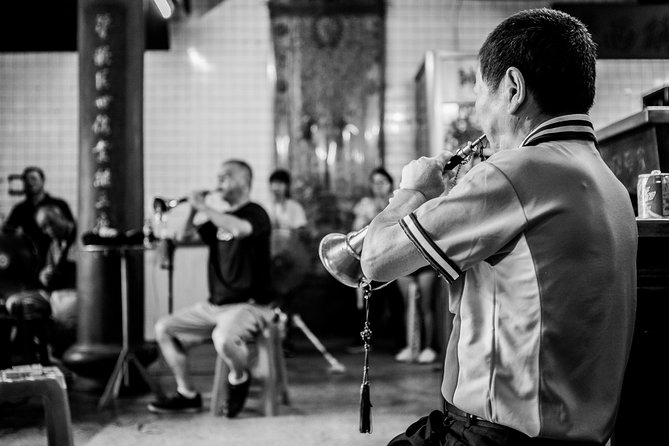
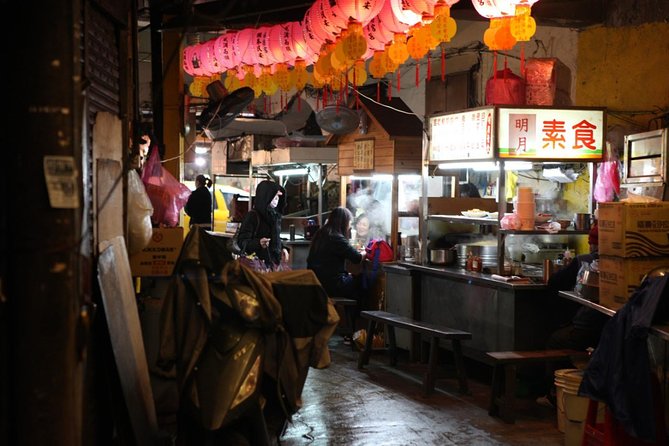
Ren’ai Market is the most direct look at everyday Keelung. It is a daytime market with fresh food, local eateries, cafés, and practical services. Seafood stalls sit alongside comfort food, massage businesses, and other shops used by residents.
The market stop lasts about 30 minutes. That is enough to walk through, notice the mix of businesses, and ask the guide what you are seeing. It is not designed as a long meal or a formal food tasting, so you should not book it expecting a full eating tour.
I like this stop because markets reveal more than a city’s famous dishes. They show what people buy on normal days, how a neighborhood serves its residents, and how food fits into the rhythm of work and errands. The combination of seafood, prepared foods, cafés, and personal services gives Ren’ai Market a practical character.
Your guide can also help you read the scene. A stall that looks ordinary may have a long local role. A dish that seems familiar may have a Keelung connection you would miss alone. The bilingual format is useful here, since you can ask about signs, ingredients, and customs without relying on guesswork.
Keep your expectations sensible. The market may be busy, and a three-hour walk cannot explain every shop. You will get an introduction rather than a complete food survey. If you want more time for eating, ask whether you can linger or return after the tour.
A few more Taipei days to compare
- From Taipei: Shifen, Jiufen, and Yehliu Guided Day Trip
★ 4.6 · 1,654 reviews - Full-Day Private Custom Taipei City Tour
★ 5.0 · 911 reviews - From Taipei: Yehliu, Jiufen, and Pingxi Day Tour
★ 4.7 · 892 reviews - Taipei: Jiufen Night View and Shifen Day Tour
★ 4.6 · 870 reviews
Finishing at Keelung Miaokou Night Market
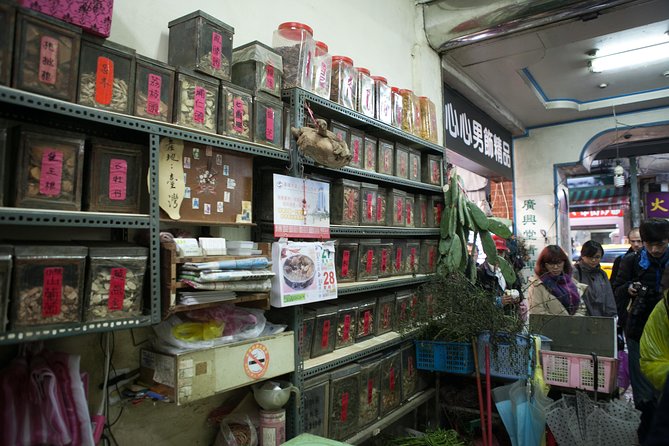
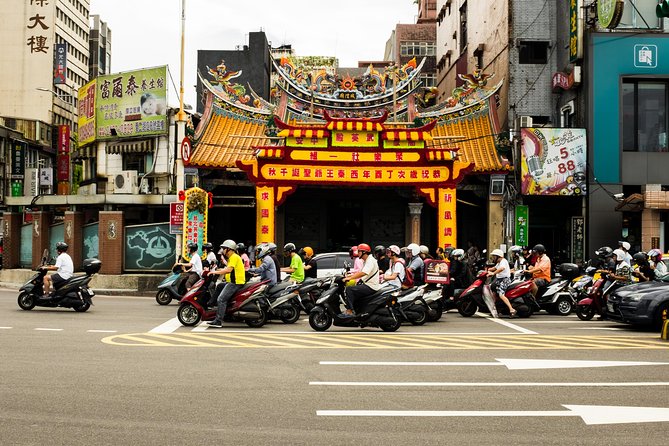
The final stop is Keelung Miaokou Night Market, one of the city’s best-known places for food and local atmosphere. The tour also connects the market with nearby temples, art, architecture, and folk beliefs.
The stop is scheduled for about 30 minutes. That is enough to understand the area and see why it matters, but it is short if you want to eat your way through the stalls. I would treat the guided portion as an orientation, then return on your own if you have time and want a longer meal.
Miaokou is especially useful as the final stop because it brings several themes together. Food is not separate from religion here. Temple activity, neighborhood identity, architecture, and eating all occupy the same urban space.
Your guide can help you make sense of that mix instead of reducing the market to a list of snacks. You may leave with a better idea of what to try, how the market relates to nearby temples, and why Keelung’s food culture is tied so closely to its port-city identity.
If you are taking this tour from a cruise ship, check your return time carefully. The walk ends back at the meeting point, and the fixed route still requires time to return to the ship or continue elsewhere.
The private format is the main value
The price is $288 per group of up to six people. For a full group, that works out to $48 per person. For three people, it is $96 each, and for two people it is $144 each. A solo booking would pay the full group rate, so the value improves sharply as your party gets larger.
That price buys a private three-hour experience rather than a general group walk. The practical advantage is flexibility. You can ask more questions, slow down at the temple or market, and tell the guide what interests you. A private format also helps if your group has mixed energy levels or different levels of familiarity with Taiwan.
For a couple, the cost is harder to justify unless you place a high value on personal guiding and local interpretation. For four to six people, the calculation is much more attractive. A family or group of friends can split the price while keeping the route focused on their own interests.
The walk is not a bargain if you measure value by the number of ticketed attractions. Admission to the listed stops is free, and the route does not center on expensive entrances. Its value is the guide’s interpretation, the local connections, and the time saved finding the less obvious corners of Keelung.
What the guides add to the walk
The tour is led by a local youth team with more than ten years of experience. That background matters because the walk depends on explanation, not simply navigation.
Mila is named as a guide, and one experience was assisted by Annie. Ilun, Mila, and Benny are also associated with other Keelung walks. Benny is noted for his passion for Keelung and its past, while the team as a whole is described as friendly, professional, and eager to share daily details as well as major events.
You should not assume the same guide will lead every booking. If a particular person matters to you, ask when reserving. Still, the local team structure gives the tour a useful strength: it is built around people who care about their own city, not a generic city script.
English and Mandarin are available. That makes the walk accessible to English-speaking visitors while keeping a direct connection to local life. The guide may also help you speak with people you meet along the way, although the experience should not be treated as a guaranteed series of personal meetings.
Walking conditions, rain, and practical planning
The route is in an urban district and is intended for most people who can take part in a normal walking tour. You should expect streets, alleys, markets, and time on your feet. Wear comfortable shoes and keep your belongings secure in crowded market areas.
Keelung’s weather deserves attention. The cancellation terms state that the experience requires good weather. If poor weather cancels the tour, you are offered another date or a full refund. At least one guide has adapted a walk during rain by keeping the group under shelter where possible, but that should be treated as a helpful possibility, not a guarantee.
The tour offers a mobile ticket and confirmation is normally received at booking. If you book within seven days of the tour, confirmation may arrive within 48 hours, subject to availability. Plan ahead if the walk must fit a cruise schedule or a tight day trip from Taipei.
The experience is booked, on average, 39 days in advance. That does not guarantee that every date fills early, but it is a useful sign that you should not wait until the last minute if your schedule is fixed.
Free cancellation is available up to 24 hours before the start time. Cancellations or changes made later are not accepted, so watch both the local time and the weather forecast.
Who should book this Keelung walk
I would choose this tour if you want a gentle introduction to Keelung rather than a checklist of major sights. It suits first-time visitors who want help understanding temples, markets, folk beliefs, and the city’s wartime traces.
It also works well for:
- A private group arriving through Keelung Port
- Visitors based in Taipei who have a free morning
- People interested in local food culture but who do not need a full tasting tour
- Families or friends who can share the group price
- Anyone who prefers questions and conversation over a fixed large-group script
I would be more cautious if you want a long meal, extensive shopping time, or a full-day history program. The market stops are brief, and the route gives you a broad introduction rather than hours at each location.
The walk is also less suitable for a traveler who dislikes uncertain weather or narrow urban routes. Keelung’s appeal comes from its working streets and older corners, not from a polished sightseeing circuit.
Should you book Private Keelung Cultural Walk?
Book it if you want to understand how Keelung’s temples, shelters, markets, and food streets connect. The private format is especially good for groups of four to six, and the portside meeting point makes it practical for a short visit.
Skip it if your main goal is a food crawl or a long, unhurried market meal. In that case, use the tour as an introduction only, then return to Miaokou or Ren’ai Market on your own.
For most visitors with a few spare hours, this is a thoughtful way to see a side of Taiwan that can be easy to miss from Taipei. The best reason to book is not a single landmark. It is the chance to walk with someone who can explain why ordinary streets, working markets, temples, and wartime shelters still matter.
FAQ
How long does the Keelung cultural walk last?
The experience lasts approximately three hours.
Where does the tour begin?
It begins at Keelung Customs Office, No. 6, Gangxi Street, Ren’ai District, Keelung City, Taiwan 200.
Where does the tour end?
The activity ends back at the meeting point.
How many people can join the private tour?
The price covers one private group of up to six people.
Is the tour available in English?
Yes. The experience is led by a bilingual guide, with English and Mandarin used for the tours.
What places are included?
The route includes Keelung Chenghuang Temple and the Nanguan music hall, Columbus Alley, a bomb shelter, Ren’ai Market, and Keelung Miaokou Night Market.
Is admission included?
The listed stops have no admission charge.
What happens if the weather is poor?
The experience requires good weather. If it is canceled because of poor conditions, you will be offered another date or a full refund.
Just added around Taipei
- Taipei: 8 Hours Private Day Tour in Wulai with Benz Vito★ 4.4 · 5 reviews
- Vintage Taipei – Best of Taiwan and Sunset Walking Tour★ 5.0 · 4 reviews
- Private Yangmingshan National Park Hiking Day Tour from Taipei★ 5.0 · 5 reviews
- Yilan 1-Day Private Tour to Kavalan Whisky & Cultural Gems★ 4.5 · 3 reviews
- Keelung Shore Excursion: Private 6H Natural Wonder & Seafood Tour★ 5.0 · 3 reviews
- Xiao Long Bao, Chicken vermicelli with mushroom and sesame oil, Tofu strips salad, Bubble milk tea. Taiwan Traditional Delicacies Experience-A (Taipei Cooking Class)★ 5.0 · 8 reviews
- Two-day Sun Moon Lake & Alishan Forest Park Tour Package★ 4.0 · 5 reviews
- Best of Taiwan 9 Days Tour★ 3.5 · 3 reviews
Keelung Shore Excursions, compared.

Keelung Shore Excursion: Jiufen & Shifen Sky Lantern Private Tour
Read our review →
Keelung Shore Excursions: Private 6-Hour Taipei City Adventure!
Read our review →
Keelung Shore Excursion Private 8-Hour Taipei Urban Adventure!
Read our review →

Keelung Shore Excursion: Yehliu Geopark, Jiufen, Houton Cat Village Private Tour
Read our review →
Taipei Private Transfer:Keelung Cruise Port to Taiwan Taoyuan Int Airport
Read our review →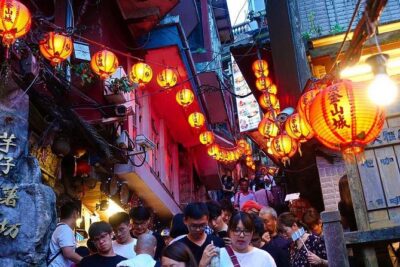
Browse the lists this tour appears in