
Reviewed · WALKING TOURS
Taipei: Old Town Walking Tour
Taipei’s old town is where Taiwan’s modern story comes into focus. On this 2.5-hour walk, you move from the National Museum of Taiwan and 228 Peace Memorial Park to the Presidential Office, Zhongshan Hall, and Ximending’s famous Red House. The route gives you more than a checklist of buildings. It connects streets, politics, memory, shopping, and daily life.
I like two things here. First, the tour puts Taiwanese history at the center, including the difficult story of the 228 tragedy. Second, it ends in Ximending, where the old city gives way to markets, shops, and street life. The main consideration is the walking: this is a city tour with several stops, not a relaxed ride between sights.
Key points
- The route begins at NTU Hospital Station Exit 4, a practical meeting point in central Taipei.
- The National Museum of Taiwan and 228 Peace Memorial Park provide the historical frame for the walk.
- The Presidential Office adds a striking architectural stop and a look at Taiwan’s political center.
- Zhongshan Hall reveals a former public auditorium with an important civic role.
- Ximending markets and the octagonal Red House finish the tour with shopping, snacks, and Taipei’s changing urban character.
- English-speaking guides such as Leo, Vincent, and Ale are praised for clear explanations, energy, and willingness to answer questions.
Starting at NTU Hospital Station Exit 4
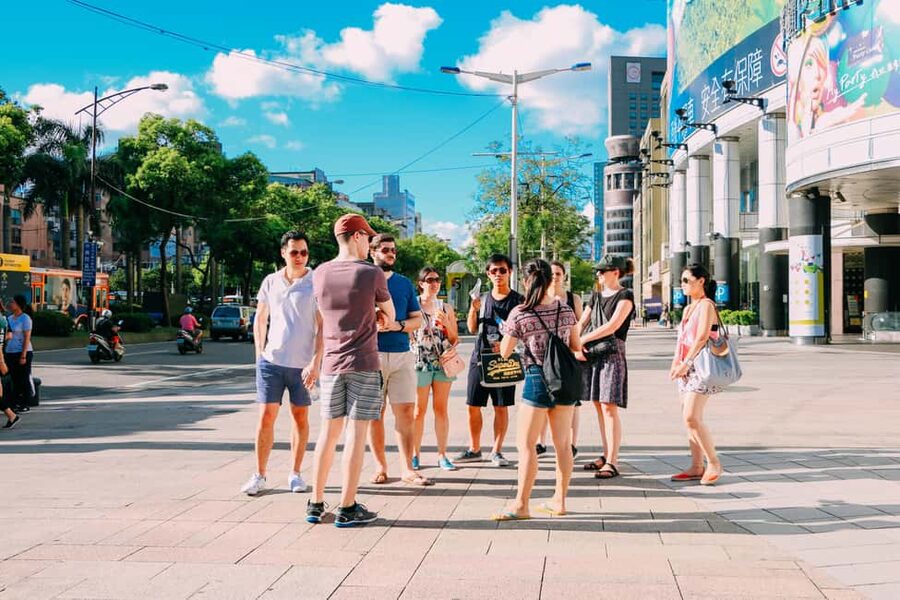
Your meeting point is at street level outside Taipei Metro’s NTU Hospital Station, Exit 4. The listed coordinates place you in central Taipei, and the walk then heads into the old town around Ximen.
One detail deserves attention before you book. The activity information labels the location as Nantou County, but the meeting point, sights, and route described here are all in Taipei. Use the Taipei Metro meeting point as your guide when planning your day.
The tour lasts about 2.5 hours. That is long enough to give the old center a proper look without taking over your entire day. I would schedule it early in your Taipei visit. The guide’s historical explanation can help you understand later visits to museums, temples, memorials, and government buildings.
This is a walking tour, so wear shoes that can handle city pavement. The route includes several outdoor sections and time on your feet. The experience is listed as wheelchair accessible, though you may still want to confirm the exact route and any temporary street conditions when booking.
More walking tours in Taipei:
- Taipei Old Town – Taiwan Introduction Walking Tour (Tip-Based)
★ 5.0 · 175 reviews - [Private Tour] Shilin Night Market Walking Tour With a Private Tour Guide (2-hr)
★ 5.0 · 123 reviews - Taipei: 2-Hour Raohe Night Market Walking Tour
★ 4.6 · 69 reviews
The National Museum of Taiwan sets the stage
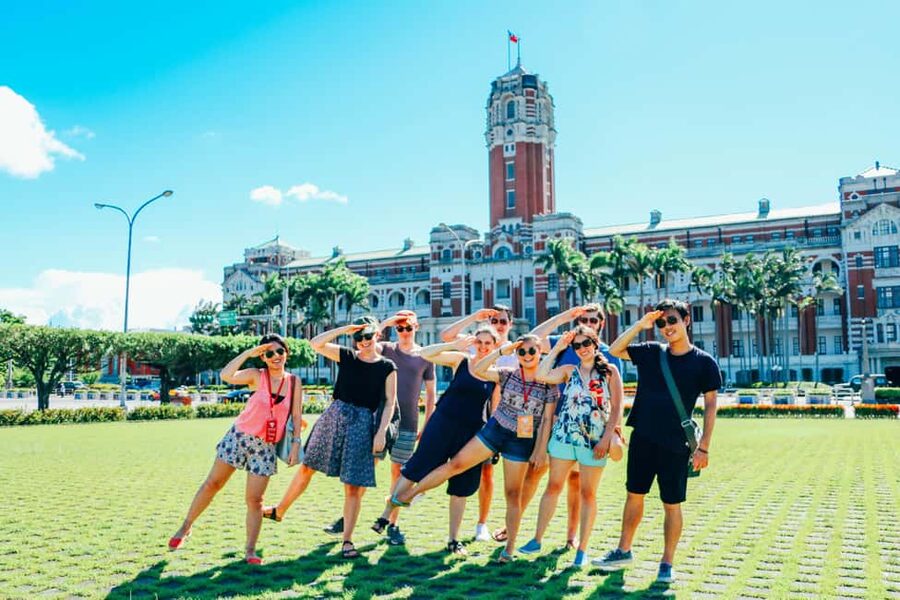
The first major stop is the National Museum of Taiwan. You pause here rather than simply walking past, which makes sense. A history walk needs a starting point, and this museum gives the old center a clear sense of age and importance.
The museum is part of the story of how Taipei developed as a modern capital. Your guide uses the stop to explain the city and Taiwan more broadly, giving you useful context before the tour moves into memorial spaces and government landmarks.
You should not expect a full museum visit during this walk. The itinerary calls for a stop, not an extended indoor museum tour. If the museum interests you, plan a separate visit at another time. The walking experience uses the building as one part of a larger story rather than treating it as the whole attraction.
That approach works well for a first look. You get enough background to recognize why the surrounding streets matter, then keep moving instead of spending the entire morning inside one institution.
228 Peace Memorial Park and a difficult chapter
The route continues through 228 Peace Memorial Park. This is one of the most important stops because the guide explains the 228 tragedy, a painful event in Taiwan’s modern history.
A short walking tour cannot cover every detail of such a serious subject. Still, placing the discussion in the park gives it more weight than hearing a quick fact while passing a shop. You can connect the history to a real public space in central Taipei.
The tour is especially useful here because Taiwan’s past is not a simple sequence of dynasties and colonial buildings. The country’s modern identity was shaped by political conflict, fear, loss, and later efforts to remember and discuss what happened. The guide’s explanation helps you see Taipei as a living city with difficult memories, not only a destination for food and shopping.
This part may feel heavier than the rest of the walk. That is appropriate. If you prefer tours that stay light and entertaining, take note. If you want a better understanding of Taiwan and its people, this is one of the strongest reasons to choose the experience.
Guides have different personalities. Leo is described as passionate, informative, and energetic. Another guide, Ale, is praised for giving a clear, entertaining outline of Taiwanese history while keeping the conversation relaxed. That easy style matters during a serious subject because it gives you room to ask questions without making the discussion feel formal or intimidating.
The Presidential Office and Taipei’s civic center
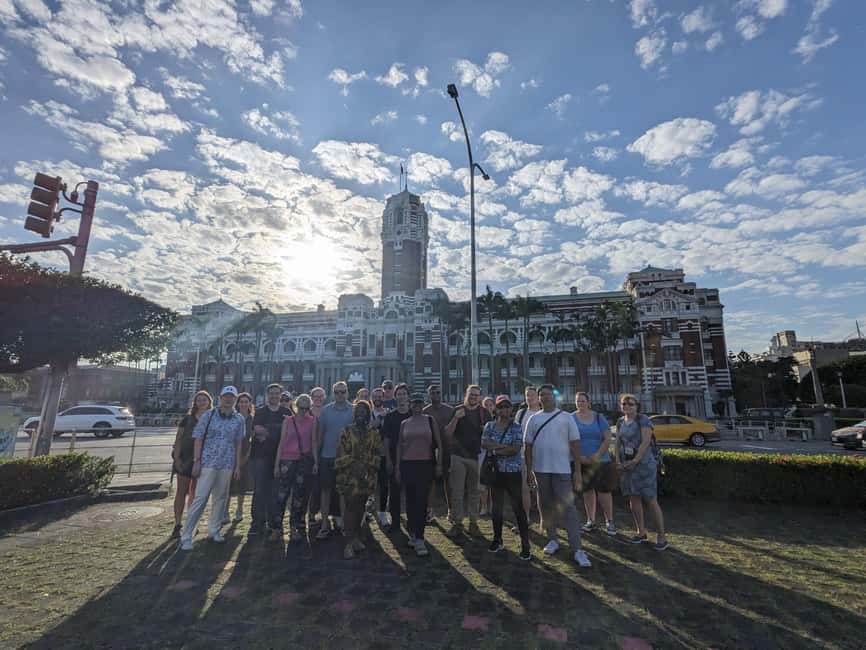
The Presidential Office is the next major landmark. The stop focuses on its architecture and its place in Taipei’s civic center.
From the outside, a government building can seem less exciting than a temple or market. Here, the guide makes it useful by placing the architecture in the story of the city. You see how power, administration, and public life have shaped this part of Taipei.
This is also a good example of why a guide adds value. A building can look impressive in a photograph, but the explanation tells you why it belongs on an old-town route. You learn to read the center of Taipei through its public institutions, not only through its storefronts.
The itinerary describes a walk-by and viewing stop rather than entry into the Presidential Office. Keep that distinction in mind. If you want to tour the interior, you would need to make separate arrangements, and no interior visit is included in the information provided here.
A few more Taipei days to compare
- From Taipei: Shifen, Jiufen, and Yehliu Guided Day Trip
★ 4.6 · 1,654 reviews - Full-Day Private Custom Taipei City Tour
★ 5.0 · 911 reviews - From Taipei: Yehliu, Jiufen, and Pingxi Day Tour
★ 4.7 · 892 reviews - Taipei: Jiufen Night View and Shifen Day Tour
★ 4.6 · 870 reviews
Markets bring the old town back to street level
After the formal landmarks, the route heads toward city markets. You pass stalls selling souvenirs and other goods, shifting from political history to everyday commerce.
I like this change of pace. A city’s character is not found only in grand buildings. It also appears in what people buy, sell, carry, and display. The markets help you see Taipei as a working city rather than a museum of old sites.
The market section is also where the tour becomes less predictable. Stalls and street activity can change, and the time available depends on the guide and the pace of the group. Treat this as a chance to look around, not as a dedicated shopping tour.
If you hope to buy souvenirs, you can note what catches your eye and return later. The tour’s main purpose is explanation and orientation. You may not have time to compare every item or make a large purchase.
Zhongshan Hall and a former public auditorium
The walk then reaches Zhongshan Hall, a historic building that once served as a public auditorium. This stop adds another layer to Taipei’s civic story.
Public halls matter because they show how a city gathered before the age of today’s large event centers and digital communication. A building like Zhongshan Hall was not simply a decorative structure. It was part of how public events, announcements, and civic life took place.
Your guide’s explanation helps connect the building to the people who used it. That is more rewarding than a quick photograph with no context. The stop also breaks up the route nicely, giving you another major landmark after the open park and government district.
The walk remains focused on the exterior route and historical explanation. The provided information does not include an interior tour or a scheduled event inside the hall, so plan on viewing it as part of the city walk.
This is one of the places where the guide’s memory and storytelling make a real difference. One guide, Iain, is praised for giving factual historical information and remembering details well. That quality is useful on a route with many names, dates, and political changes.
Ximending changes the mood
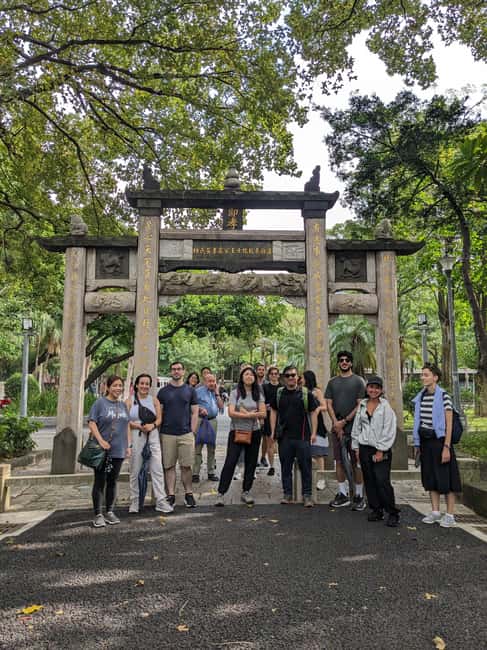
From Zhongshan Hall, you continue toward Ximending. This is one of Taipei’s best-known shopping areas, and it gives the final part of the tour a completely different feel.
The area is known for shops, markets, souvenirs, and street activity. After walking through memorial spaces and government districts, you arrive in a part of the city shaped by entertainment and retail. The contrast is the point. Taipei’s old center has not been frozen in time. It keeps changing around the older buildings.
You will likely find Ximending more energetic and crowded than the earlier sections of the walk. That can be fun, but it also means more visual noise and less quiet conversation. Stay close to your guide when the streets fill up, and keep your phone and wallet secure in busy areas.
The tour does not present Ximending as an isolated shopping stop. Instead, it shows how the district fits into the larger story of Taipei. You see the old city, then watch it turn into a modern commercial center within a few blocks.
The Red House makes a memorable finish
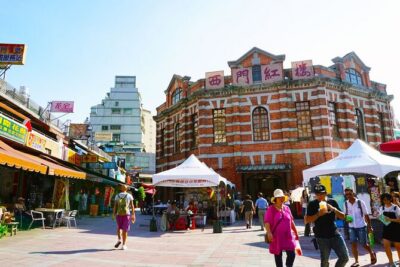
The final landmark is the Red House, a red-brick Western-style building shaped like an octagon. It was the city’s first public market.
The building is a smart ending for the tour because it combines architecture, commerce, and change. It began as a market, and it now sits within the larger Ximending shopping district. Its unusual shape makes it easy to recognize, while its former role helps explain how public markets supported city life.
This is also a good place to keep exploring after the tour. The walking experience ends with a clearer sense of Taipei’s past and the forces that turned it into the city you see today. You can continue through Ximending on your own, stop for food, or return later for more shopping.
The Red House is not just a final photo stop. It gives the tour a visual full stop. You begin with museums, parks, and government buildings, then finish at a market structure surrounded by modern city life.
How the guides shape the experience
The guide is the most important variable on a history walk. The strongest guide style for this route is clear, factual, and open to questions.
Leo is described as energetic and passionate. Vincent is praised as a perfect guide, while Ale is noted for a relaxed manner that encouraged questions and discussion. These comments suggest that the provider uses guides who can present a lot of information without making the walk feel like a lecture.
The tour is offered in English. One Portuguese-speaking participant found the explanation easy to follow despite English not being their first language. That does not guarantee the same experience for every language learner, but it suggests that the presentation can be accessible to people who use English as a second language.
A private group option is available. That may be worth considering if you want a slower pace, have specific historical questions, or are traveling with family or friends. A private tour can also make it easier to manage the walking pace, though the provided information does not state the private-group price or size.
Is the price good value?
The listed price is $1.10 per person, which is unusually low for a guided 2.5-hour city walk. At that price, the value is obvious if the booking price shown to you is accurate at the time you reserve.
Still, check the final price carefully before paying. Activity prices can vary by date, group type, currency, or booking conditions. The information supplied here gives the listed rate but does not explain whether additional charges apply.
Even at a higher final price, the route covers several central landmarks in one outing. You are paying mainly for orientation and explanation rather than admissions, food, or transportation. No attraction entry tickets or meals are included in the information provided.
Free cancellation up to 24 hours before the start gives you useful flexibility. You can also reserve now and pay later, which helps if your Taipei schedule is still shifting.
Who should book this Taipei walk?
I would choose this tour for a first visit, especially if you want history before sightseeing. It suits you if you enjoy walking, public architecture, memorials, markets, and an English-speaking guide who can explain how the city developed.
It is also a good match if you have only a few hours in central Taipei. The route covers several recognizable sights without requiring a full day. You can use the finished tour as a map for deciding where to return.
You may want a different experience if your main goal is food. Ximending and the markets appear on the route, but this is not a food tour. You may also prefer another option if you want Taipei 101, temples, night markets, Jiufen, or mountain views, since none of those are part of this walk.
The tour is listed as wheelchair accessible, which makes it worth considering for visitors who need step-free access. Because city sidewalks and street conditions can change, confirm the practical details if accessibility is essential for your party.
Should you book the Old Town Walking Tour?
Book it if you want Taipei’s story explained as you walk. The route covers the National Museum of Taiwan, 228 Peace Memorial Park, the Presidential Office, Zhongshan Hall, old markets, Ximending, and the Red House. That is a strong introduction to the city center in 2.5 hours.
I especially like the balance between serious history and ordinary street life. You hear about the 228 tragedy, then walk through markets and shopping streets. You see civic buildings, then finish at a former public market surrounded by modern Ximending.
Skip it if you dislike walking or want a tour built around food, temples, or sweeping city views. For everyone else, this is a practical first-day choice, and the very low listed price makes it easy to justify.
FAQ
Where does the tour meet?
The meeting point is at street level outside Taipei Metro NTU Hospital Station Exit 4 in Taipei.
How long does the tour last?
The walking tour lasts 2.5 hours.
What language is the tour offered in?
The live tour guide speaks English.
Which major sights are included?
The route includes the National Museum of Taiwan, 228 Peace Memorial Park, the Presidential Office, Zhongshan Hall, city markets, Ximending, and the Red House.
Does the tour explain the 228 tragedy?
Yes. The guide discusses the 228 tragedy while you visit 228 Peace Memorial Park.
Is the tour wheelchair accessible?
The activity is listed as wheelchair accessible.
Can I book a private group?
Yes. A private group option is available.
Just added around Taipei
- Taipei: 8 Hours Private Day Tour in Wulai with Benz Vito★ 4.4 · 5 reviews
- Vintage Taipei – Best of Taiwan and Sunset Walking Tour★ 5.0 · 4 reviews
- Private Yangmingshan National Park Hiking Day Tour from Taipei★ 5.0 · 5 reviews
- Yilan 1-Day Private Tour to Kavalan Whisky & Cultural Gems★ 4.5 · 3 reviews
- Keelung Shore Excursion: Private 6H Natural Wonder & Seafood Tour★ 5.0 · 3 reviews
- Xiao Long Bao, Chicken vermicelli with mushroom and sesame oil, Tofu strips salad, Bubble milk tea. Taiwan Traditional Delicacies Experience-A (Taipei Cooking Class)★ 5.0 · 8 reviews
- Two-day Sun Moon Lake & Alishan Forest Park Tour Package★ 4.0 · 5 reviews
- Best of Taiwan 9 Days Tour★ 3.5 · 3 reviews
Walking Tours, compared.
Taipei Old Town – Taiwan Introduction Walking Tour (Tip-Based)
Read our review →![[Private Tour] Shilin Night Market Walking Tour With a Private Tour Guide (2-hr)](https://6.taiwanvisits.com/wp-content/uploads/private-tour-shilin-night-market-walking-tour-with-a-private-tour-guide-2-hr-400x266.jpg)
[Private Tour] Shilin Night Market Walking Tour With a Private Tour Guide (2-hr)
Read our review →

2-hr Raohe Night Market Walking Private Tour with a Tour Guide
Read our review →
Vintage Taipei – Best of Taiwan & Sunset Walking Tour (Tip-based)
Read our review →
Taipei’s Origin & Longshan Temple – Taiwan Cultural Walking Tour
Read our review →
Browse the lists this tour appears in