
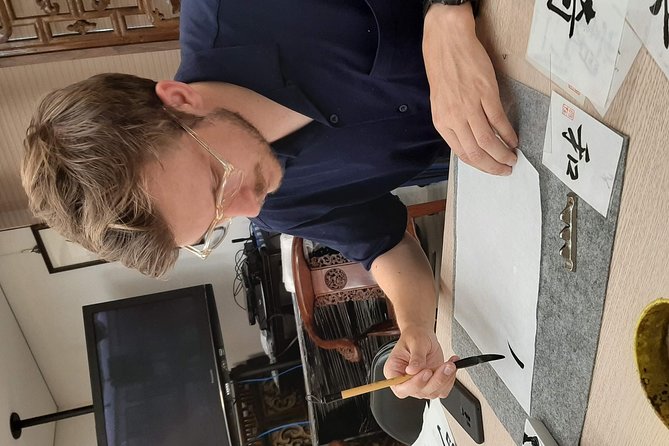
Reviewed · WORKSHOPS
Taipei Calligraphy Workshop (DIY incl.)
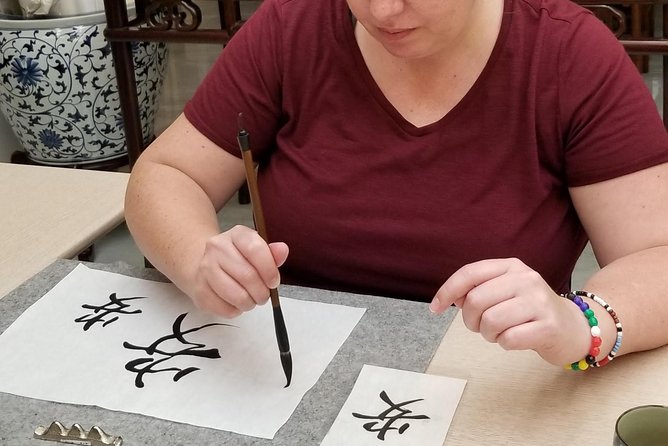
Taipei’s calligraphy workshop turns an old art into a calm, hands-on lesson. You learn why brush angle, pressure, rhythm, and stillness matter, then put ink to paper yourself. I like the six-person limit, which gives you room to ask questions, and the chance to leave with artwork rather than just a few photos.
I also like the clear cultural setting: you study the history and styles of Chinese calligraphy before practicing. The main consideration is price. At $79 for about two hours, it is not a bargain activity, though the small group, instruction, materials, and finished pieces help explain the cost.
Key points
- Small class of six: You get direct help instead of watching a teacher from the back of a crowded room.
- Beginner-friendly instruction: No previous Chinese or artistic skill is required.
- More than brush practice: The class covers calligraphy’s long development and different writing styles.
- A take-home souvenir: You create your own brushwork pieces during the session.
- Patient named instructors: Teresa, Ruby, and Ginn are associated with clear, friendly teaching.
- Easy city activity: The meeting point is near public transportation in Da’an District, and the session ends where it begins.
What the two-hour Taipei class actually offers
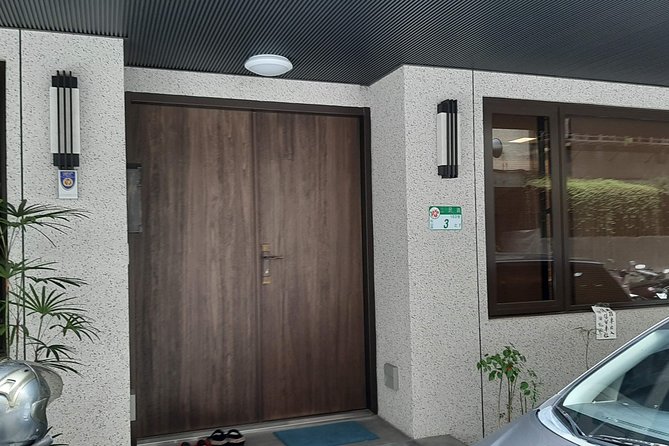
This is not a sightseeing tour with a quick brush demonstration. It is a sit-down workshop built around participation. You make your own way to the classroom at No. 16, Lane 151, Section 2, Jianguo South Road, in Taipei’s Da’an District.
The format is simple. You meet the instructor, get familiar with the tools, hear an introduction to Chinese calligraphy, practice basic movements, and then produce your own pieces. The activity ends back at the meeting point, so you do not need to arrange a second pickup or find your way to another neighborhood.
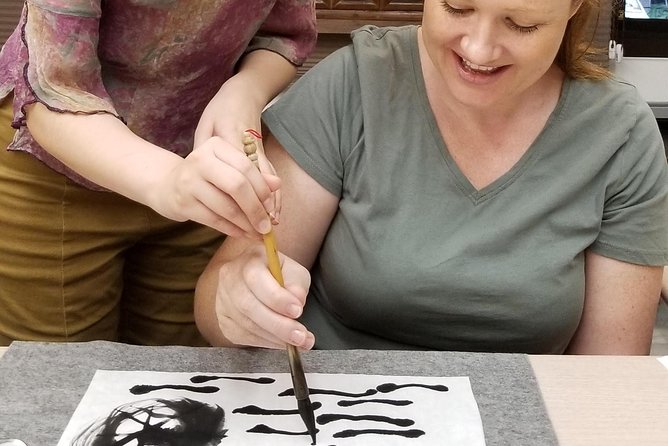
The class is capped at six people. That detail matters. Brushwork is easy to misunderstand when you are watching from a distance, but a small group allows the instructor to correct your hand position and offer suggestions as you work.
More hands-on classes in Taipei:
- Xiao Long Bao, Beef Noodles & Boba Tea Cooking Class in Taipei
★ 5.0 · 159 reviews - Xiao Long Bao, Chicken vermicelli with mushroom and sesame oil, Tofu strips salad, Bubble milk tea. Taiwan Traditional Delicacies Experience-A (Taipei Cooking Class)
★ 5.0 · 79 reviews - Taipei Cooking Class & Market Adventure in Historic Dadaocheng
★ 5.0 · 77 reviews
Starting with the history behind the brush
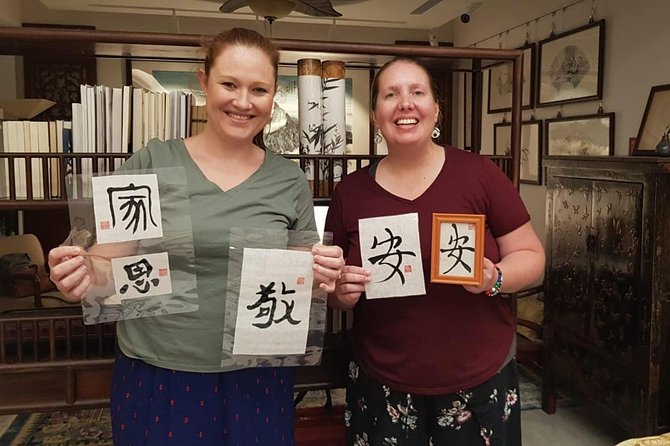
The opening lesson gives you a short introduction to Chinese calligraphy and its long development. You also look at different calligraphic styles before touching the brush in a serious way.
This background makes the practical work more meaningful. A character is not simply a picture to copy. The movement of the brush, the order of strokes, and the balance of empty and filled space all affect the final result.
I especially like this part for anyone planning to visit the National Palace Museum. After learning a few basic ideas, you may look at calligraphy there with more patience. You will have some sense of why a work feels controlled, forceful, light, or graceful, even if you cannot read every character.
The introduction is also useful if you know some Chinese already. Ginn, one of the instructors associated with the class, has been praised for expanding a participant’s existing understanding rather than treating the session as a one-size-fits-all lesson.
Learning to hold and control the brush
The next stage focuses on the brush itself. You learn how to hold it and manage its movement, even if you have never used one before.
This sounds basic, but it is the heart of the activity. Beginners often grip a brush like a pencil and try to draw each stroke slowly. Chinese calligraphy asks for something different. You work with pressure, direction, speed, and pauses. The result depends as much on how you move as on where the ink lands.
The class presents these ideas in a beginner-friendly way. You are not expected to arrive with artistic talent or Chinese language skills. The emphasis is on simple techniques, concentration, and intention.
That makes the workshop a good fit for people who want a quiet cultural activity rather than another fast-moving Taipei attraction. You still learn a physical skill, but the pace gives you time to pay attention to your hand and breathing.
The teaching style appears to be a major strength. Teresa is described as patient, welcoming, and clear, while Ruby helped make arrival arrangements easy and gave calm instruction during the class. Those details matter because brushwork can feel awkward at first. A patient teacher keeps the first attempts from becoming frustrating.
From practice strokes to your own artwork
Once you understand the basic method, you practice calligraphy yourself. The class then leads you toward making your own pieces to take home.
This is where the $79 price begins to make more sense. You are not paying only for a lecture or a demonstration. You are getting guided practice, materials, and a personal souvenir created during the session. The final piece may not look like a museum work, but it carries a better memory of Taipei than a mass-produced gift.
The finished work also gives the class a clear shape. You begin with cultural context, move into technique, and finish by applying what you have learned. That progression is more satisfying than an activity that leaves you with nothing to show for your time.
You should keep your expectations realistic. Two hours is enough for an introduction, not mastery. Your first brushwork may be uneven, and that is part of the point. The instructor helps you understand the process, but the workshop cannot replace years of practice.
The class is especially well suited to couples, friends, and small families who want to make something together. It can also work for solo visitors who enjoy careful, creative activities. The setting is designed for participation, not performance, so you do not need to feel self-conscious about being a complete beginner.
A few more Taipei days to compare
- From Taipei: Shifen, Jiufen, and Yehliu Guided Day Trip
★ 4.6 · 1,654 reviews - Full-Day Private Custom Taipei City Tour
★ 5.0 · 911 reviews - From Taipei: Yehliu, Jiufen, and Pingxi Day Tour
★ 4.7 · 892 reviews - Taipei: Jiufen Night View and Shifen Day Tour
★ 4.6 · 870 reviews
A cultural setting rather than a generic craft class
The workshop takes place in a space decorated with Chinese paintings, calligraphy, and related objects. This gives the activity a stronger sense of place than a plain craft room.
You are surrounded by examples of the tradition while learning its basic rules. That setting helps connect the brush in your hand with the larger art form introduced at the beginning of the session.
There is also a quiet, reflective quality to the class. The activity is presented as a modern introduction to Chinese calligraphy and mindfulness. You do not need to treat it as a spiritual lesson, but the slow movements and careful attention can make it a welcome break from Taipei’s busy streets.
Tea has been served during at least some sessions. It is a small detail, but it suits the pace of the workshop and adds to the feeling of a hosted cultural lesson. Since refreshments are not formally listed as an inclusion, you should not book solely on the expectation of tea.
What makes the instructors important
The class may be led by Teresa, Ruby, or Ginn, so your exact teaching style can vary. The instructors connected with the activity are repeatedly described as patient, friendly, and clear.
Teresa is noted for explaining technique and history in an accessible way. She also adapts to individual interests, which is useful if you already know some Chinese or have a particular reason for trying calligraphy.
Ruby is helpful before the class begins. Clear directions matter in Taipei, especially when you are trying to find a lane address rather than a large landmark. Ginn is associated with building on a participant’s existing Chinese knowledge and explaining the subject in a way that goes beyond simple copying.
You should still confirm the meeting details in your booking confirmation. The activity has a maximum of six people, but the exact instructor is not guaranteed in the information provided.
Is $79 good value for two hours?
The listed price is $79 per person. That places the workshop above many casual craft activities, so value depends on what you want from your Taipei day.
If you only want to try a brush for a few minutes, the price may feel high. You are paying for roughly two hours, a small class, instruction, materials, cultural explanation, and artwork to take with you. Gratuities are included, which removes one extra cost.
I see the strongest value in the personal attention. A larger class could offer the same broad introduction but less help with the brush. With no more than six people, the instructor can watch your technique and respond to your questions.
The class also has practical value for a rainy afternoon. One participant described it as a relaxing way to spend wet weather in Taipei, with tea and a comfortable setting. It is a useful choice when you want an indoor activity that still connects you with Taiwanese and Chinese culture.
Group discounts are available, so the price may work better for friends or families booking together. Private transportation is not included, but the meeting point is near public transportation. You need to reach the classroom independently and return from there after the session.
Who should book this calligraphy experience?
I would choose this workshop for several types of visitors:
- You want a cultural activity that asks you to participate.
- You have little or no experience with Chinese calligraphy.
- You enjoy art but do not consider yourself artistic.
- You want a meaningful souvenir made during your trip.
- You are visiting Taipei with a partner or a small group.
- You want an indoor activity for a rainy afternoon.
- You plan to visit the National Palace Museum and want more context for its calligraphy displays.
The class may be less suitable if you want a full-day art course or advanced instruction. It is an introduction, and the two-hour format limits how far the lesson can go.
It may also disappoint anyone looking for a broad city tour. You spend the time at one classroom location, with no private transport and no sightseeing stops. That focused format is a benefit for some people and a limitation for others.
Practical details before you book
The activity lasts about two hours and begins and ends at the same meeting point in Da’an District. Mobile tickets are accepted, and confirmation is provided when you book.
The location is near public transportation, but no private transportation is included. Allow enough time to find No. 16, Lane 151, Section 2, Jianguo South Road rather than arriving at the last minute.
Most people can participate, and service animals are allowed. The minimum group requirement applies, so the activity can be canceled if too few people book. In that case, you are offered another date or experience, or a full refund.
You can cancel for a full refund up to 24 hours before the start time. Changes or cancellations inside that 24-hour window are not accepted for a refund. Taipei local time controls the cutoff.
Should you book the Taipei calligraphy workshop?
Book it if you want a focused, personal cultural lesson and like the idea of creating your own souvenir. The small group, patient instruction, and mix of history with practice give the class more substance than a quick tourist demonstration.
At $79, it is best viewed as a short private-style lesson in a group setting, not a cheap craft stop. I would especially recommend it for couples, small groups, museum-minded visitors, and anyone looking for a calm indoor activity. If you want advanced training, extensive sightseeing, or a low-cost introduction, choose something else.
FAQ
How long does the Taipei calligraphy workshop last?
The workshop lasts approximately two hours.
Where does the calligraphy class meet?
It meets at No. 16, Lane 151, Section 2, Jianguo South Road, Da’an District, Taipei City, Taiwan 106.
Where does the activity finish?
The activity ends back at the meeting point.
How many people can join the class?
The class has a maximum of six participants.
Do I need previous calligraphy experience?
No. The class is designed for beginners, and no previous experience is required.
What will I learn during the workshop?
You will learn about the history and styles of Chinese calligraphy, how to hold and control the brush, and basic techniques for creating your own work.
Do I get to take anything home?
Yes. You create calligraphic pieces during the class and take them with you.
Is transportation included?
No. Private transportation is not included. You make your own way to the classroom, which is near public transportation.
Can I cancel for a refund?
Yes. You can cancel at least 24 hours before the start time for a full refund. Cancellations or changes made less than 24 hours before the activity are not accepted for a refund.
Just added around Taipei
- Taipei: 8 Hours Private Day Tour in Wulai with Benz Vito★ 4.4 · 5 reviews
- Vintage Taipei – Best of Taiwan and Sunset Walking Tour★ 5.0 · 4 reviews
- Private Yangmingshan National Park Hiking Day Tour from Taipei★ 5.0 · 5 reviews
- Yilan 1-Day Private Tour to Kavalan Whisky & Cultural Gems★ 4.5 · 3 reviews
- Keelung Shore Excursion: Private 6H Natural Wonder & Seafood Tour★ 5.0 · 3 reviews
- Xiao Long Bao, Chicken vermicelli with mushroom and sesame oil, Tofu strips salad, Bubble milk tea. Taiwan Traditional Delicacies Experience-A (Taipei Cooking Class)★ 5.0 · 8 reviews
- Two-day Sun Moon Lake & Alishan Forest Park Tour Package★ 4.0 · 5 reviews
- Best of Taiwan 9 Days Tour★ 3.5 · 3 reviews
Workshops, compared.
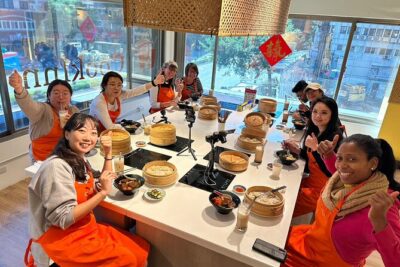
Xiao Long Bao, Beef Noodles & Boba Tea Cooking Class in Taipei
Read our review →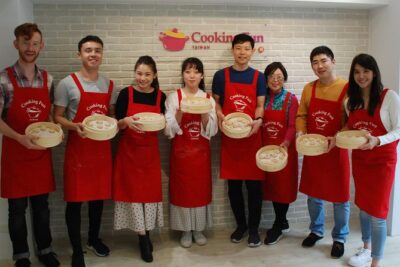
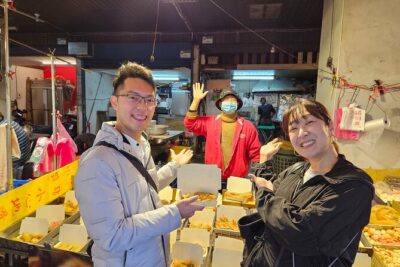
Taipei Cooking Class & Market Adventure in Historic Dadaocheng
Read our review →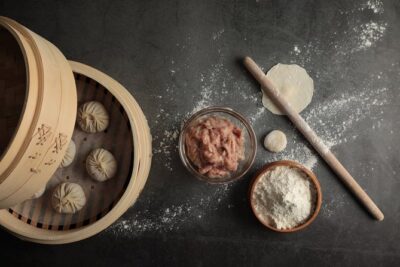
Xiao Long Bao & Boba Tea Cooking Class in Taipei
Read our review →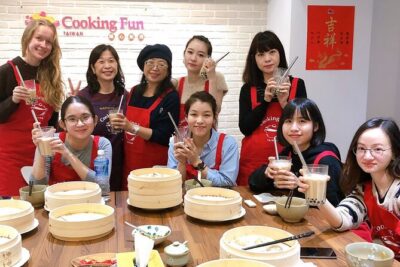
Xiao Long Bao, Pork thick soup, Bubble milk tea. Taiwan Traditional Light Meals Experience-B (Taipei Cooking Class)
Read our review →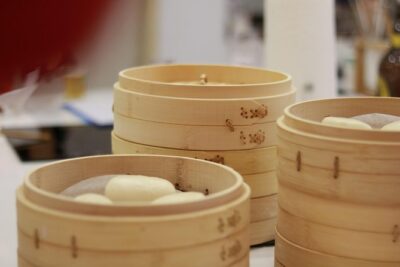
Street Food Cooking Class in Taipei : Gua Bao/Lu Rou Fan/Boba Tea
Read our review →

Browse the lists this tour appears in