
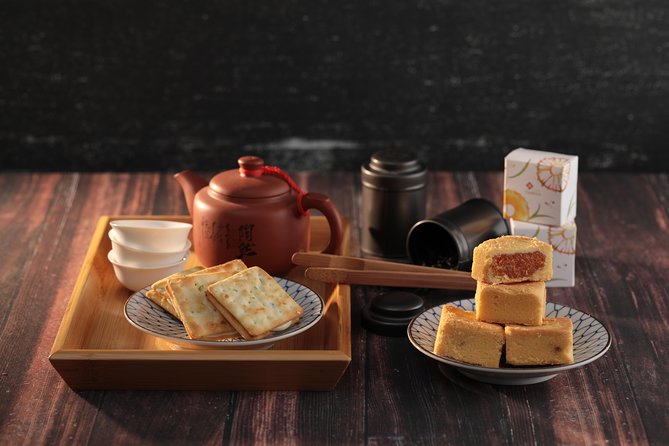
Reviewed · TAIWAN TEA TOURS
Taiwanese Baking Class with Oolong Tea Tasting in Taipei
Taiwanese pineapple cakes carry a sweet bit of wordplay: ong-lai, the local pronunciation for pineapple, sounds like a wish for fortune and prosperity to arrive. In this Taipei class, you make these symbolic pastries, plus mung bean cakes, then sit down with Taiwan oolong tea and taste what you have prepared.
I like the small maximum of 10 people, which gives the instructor room to explain each step. I also like the practical souvenir: your pastries are packaged for the trip home, along with recipes. The main consideration is timing. The details describe the class as roughly 2.5 hours, while the tour summary lists two hours, so allow the longer block in your plans.
Key points at a glance
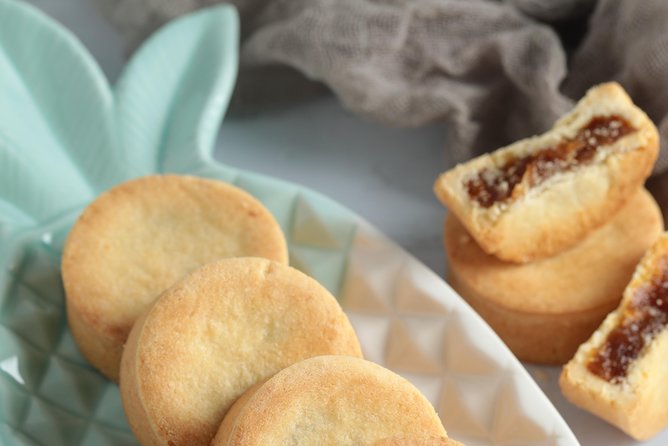
- Bake two Taiwanese classics: Learn about pineapple cakes and mung bean cakes, both tied to local food traditions and good wishes.
- Taste scallion nougat crackers: Flaky savory crackers and milky-sweet nougat provide a different flavor from the fruit pastries.
- Finish with oolong tea: The tea service adds a short introduction to Taiwan’s tea culture and pairs naturally with the sweets.
- Take home a souvenir box: Your baked goods are packaged for you, with recipes to help you remember the process.
- Keep the group small: The class has a maximum of 10 people, a useful size for a hands-on lesson.
- Meet in central Taipei: The CookInn Taiwan Zhongshan classroom is at 66 Section 1, Chengde Road, 2nd floor, in Datong District.
Why pineapple cakes mean more in Taiwan
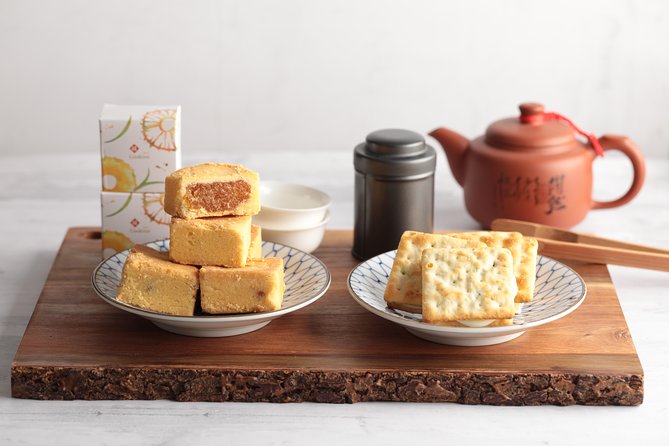
A pineapple cake is easy to mistake for a simple souvenir cookie. In Taiwan, it carries a message.
The pronunciation of pineapple, ong-lai, sounds like a phrase associated with fortune and prosperity coming your way. That is why these pastries are often given as gifts. You are not just bringing home a box of sweets. You are carrying a small edible blessing, which makes the baking lesson more meaningful than a standard dessert workshop.
The class focuses on making pineapple cakes and mung bean cakes. Pineapple cakes offer a sweet, fruity filling inside a pastry shell. Mung bean cakes bring a different character, with a filling and texture that help you see how varied Taiwanese pastry can be.
You should expect the instructor to guide you through the preparation rather than simply hand you finished dough. The supplied information does not give the exact recipe or the amount of hands-on work at each stage, so the pace may depend on the class group. Still, the format is built around making the pastries yourself, not just watching a demonstration.
That matters if you enjoy food classes for the process. You get to see how familiar bakery-counter treats are put together, then taste the result while the lesson is still fresh in your mind.
More tea houses and plantations near Taipei:
- From Taipei: Thousand Island Lake and Pinglin Tea Plantation
★ 4.7 · 519 reviews - Thousand Island Lake and Pinglin Tea Plantation from Taipei
★ 4.5 · 172 reviews - From Taipei: Pinglin Tea Culture and Maokong Guided Day Tour
★ 4.8 · 104 reviews
Starting at CookInn Taiwan in Zhongshan
The meeting point is CookInn Taiwan’s Zhongshan classroom at 66 Section 1, Chengde Road, 2nd floor, in Taipei’s Datong District. The activity begins at 2:30 pm and ends back at the same place.
The location is near public transportation, which makes this easier to fit into a Taipei day than a class requiring a long ride outside the city. I would still plan to arrive with time to spare. A second-floor classroom and a fixed afternoon start mean you do not want to be hunting for the address at 2:29.
Bring the mobile ticket listed with your booking. Confirmation is provided at booking, so you should have the essential details before the class date. The maximum group size is 10, a practical limit for a cooking lesson where several people may need help at the same time.
The afternoon timing works well with a morning spent sightseeing. You might visit another part of Taipei first, have lunch, then make your way to Zhongshan for the 2:30 session. Since the class returns to the meeting point, you can continue with dinner plans afterward without arranging a separate pickup.
Making pineapple and mung bean pastries
The central part of the class is the baking lesson. You learn how to make two traditional Taiwanese pastries, pineapple cakes and mung bean cakes. The appeal is partly culinary and partly cultural: these are foods that connect everyday snacking with gift-giving and good fortune.
Pineapple cakes are the obvious star. They are among Taiwan’s best-known edible souvenirs, and learning to make them gives you a better sense of what is inside the neat packages sold around the city. Instead of seeing them only as a ready-made purchase, you understand the pastry as something built by hand.
Mung bean cakes add a useful comparison. They are not simply a second version of the pineapple pastry. Their flavor profile helps show how Taiwanese baking uses different fillings and textures. If you are booking for a family or a mixed group, making two pastries also keeps the lesson from feeling repetitive.
The class is described as suitable for food-focused visitors, but you do not need to be an expert baker to see the value. Clear instruction matters more than prior skill. A past class description highlights patient guidance, clear directions, attractive packaging, and recipes to take home. Those are practical strengths for anyone who wants to follow the method again.
The supplied details do not specify whether every stage is made entirely from scratch, how much time the pastries spend in the oven, or whether all ingredients are prepared in the room. I would not book this expecting a professional pastry-school course. Think of it as a cultural baking activity with real participation and a finished edible result.
The savory-sweet scallion nougat cracker
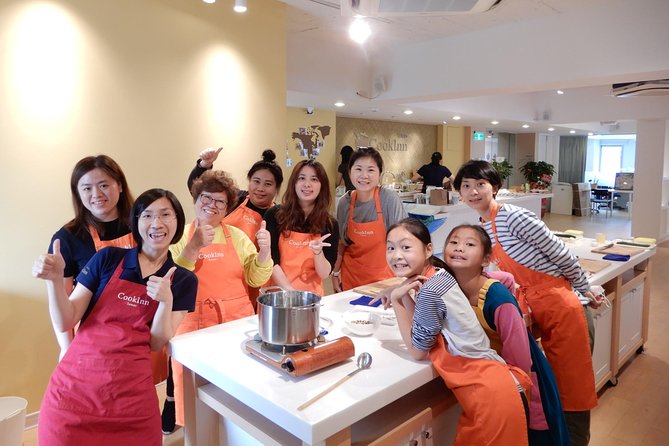
One of the most interesting food details is the scallion nougat cracker. This is not another fruit-filled pastry. It combines flaky savory scallion crackers with a milky-sweet nougat center.
That pairing gives the tasting some range. Pineapple cakes lean toward familiar sweetness, while scallion nougat crackers bring salt, dairy sweetness, and a crisp texture. Served with tea, they make a good reminder that Taiwanese snack culture does not draw a hard line between savory and sweet.
The information describes the scallion nougat crackers as part of the food experience, but it does not clearly state that you will prepare them yourself in the same way as the pineapple and mung bean cakes. The hands-on baking focus is specifically tied to the traditional pastries. Expect to taste the crackers, and check with CookInn Taiwan if making them is important to you.
I like this element because it prevents the class from becoming a single-note sugar session. You get to compare several textures and flavors, which gives the tea service a better purpose than simply adding a drink at the end.
More cooking classes in Taipei:
- Xiao Long Bao, Beef Noodles & Boba Tea Cooking Class in Taipei
★ 5.0 · 159 reviews - Xiao Long Bao, Chicken vermicelli with mushroom and sesame oil, Tofu strips salad, Bubble milk tea. Taiwan Traditional Delicacies Experience-A (Taipei Cooking Class)
★ 5.0 · 79 reviews - Taipei Cooking Class & Market Adventure in Historic Dadaocheng
★ 5.0 · 77 reviews - Xiao Long Bao & Boba Tea Cooking Class in Taipei
★ 5.0 · 28 reviews
Oolong tea and a calmer finish
After the baking, the instructor introduces traditional Taiwanese tea culture through an oolong tea service. Taiwan oolong is known for a flavor shaped by the island’s growing conditions, and the class uses it as a partner for the pastries.
This final section changes the rhythm. The baking portion is active and task-focused. Tea gives you time to sit down, taste the finished food, and pay attention to aroma and flavor. It is a modest introduction rather than a full tea course, but it adds context that you would miss if the class ended as soon as the oven work was done.
The pairing is also sensible. Oolong can cut through sweet pastry and works with the milky sweetness of the nougat crackers. You are not only being given refreshments after the work. You are being shown how these foods can be enjoyed together.
Do not expect a long specialist seminar on tea production. The available details promise an introduction to Taiwanese tea culture and a traditional tea service. For most visitors, that is enough to add a cultural layer without turning a short baking class into a full lecture.
The take-home box is part of the value
A useful feature is the special souvenir box. Your pineapple cakes and other prepared treats are packaged for you to take home, and recipes are included.
This matters in two ways. First, the treats become a gift for someone who did not join the class. Pineapple cakes already carry a message of prosperity, so sharing them gives the souvenir more meaning than a generic snack from an airport shelf.
Second, the recipes give the experience a life beyond the afternoon. You may not recreate the pastries perfectly on your first attempt, but you have a reference point and a reminder of the techniques. That is a better parting gift than a few samples that disappear before dinner.
Packaging also solves a small practical problem. Fresh pastries can be awkward to carry around Taipei in a loose bag. A dedicated box keeps them together and makes the end of the activity feel complete.
Is $80 a fair price?
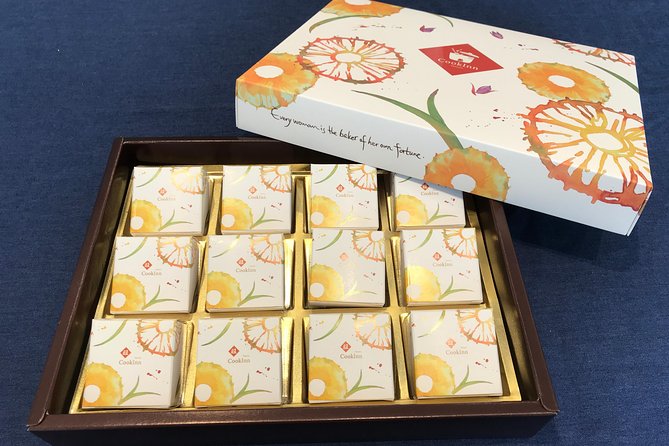
At $80 per person, this is not the cheapest way to eat Taiwanese pastries. You can buy pineapple cakes and tea for far less. The price is paying for instruction, ingredients, a small-group format, tea service, snacks, recipes, and a boxed take-home result.
I see the strongest value for people who want an activity, not just a snack. You are setting aside about 2.5 hours, learning the meaning behind the food, making pastries yourself, and leaving with something to share. If you only want to sample Taiwan’s famous sweets, a bakery visit will cost less and take less time.
The group limit helps support the price. A maximum of 10 gives the instructor a reasonable chance to watch the work, answer questions, and help with technique. Large cooking classes can turn into demonstrations where people at the back barely participate. This format is more personal, though the actual group size on your date can vary.
The class is also a good rainy-day style activity in practical terms, but the booking conditions say it requires good weather and may be canceled if conditions are poor. That is worth keeping in mind when you build a tight Taipei itinerary. If CookInn Taiwan cancels for weather or because the minimum number is not met, you are offered another date or experience, or a full refund.
Who will enjoy this class most?
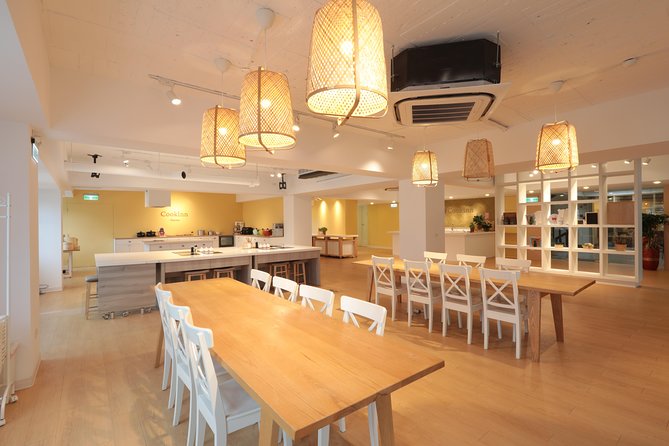
I would recommend it to people who like food with a story. The meaning behind ong-lai gives the pineapple cakes a clear cultural connection, and the tea service adds a second Taiwanese tradition to the same afternoon.
It suits couples, families, and small groups of friends who want to make something together. The class has a short enough duration to fit into a city break, and the take-home box gives children or first-time bakers a clear result at the end.
It also suits shoppers who want a souvenir with more personal value. You can still buy other Taiwanese gifts, but these pastries come with a memory of making them and a recipe to keep.
I would be less likely to recommend it if you are seeking advanced baking instruction, a long tea ceremony, or a full meal. The class is focused on traditional pastries, snacks, and tea. It is a pleasant cultural cooking activity, not a full-day culinary course.
Practical planning for the afternoon
Set aside at least the stated 2.5 hours, even though the tour summary gives a two-hour estimate. The longer figure is safer when planning dinner, a museum visit, or an evening reservation.
The start time is 2:30 pm. Since the class ends at the meeting point, you can plan your next activity from the Zhongshan classroom rather than from a separate drop-off site. The exact address is CookInn Taiwan, Zhongshan classroom, 103 Taiwan, Taipei City, Datong District, Section 1, Chengde Road, number 66, 2nd floor.
The activity is near public transportation, but the supplied details do not identify a specific station or walking time. Use the full address when planning your route, and leave a little margin for finding the classroom.
Free cancellation is available if you cancel at least 24 hours before the local start time. Changes or cancellations inside that window are not refunded. That policy is fairly clear, but the weather and minimum-group conditions mean you should avoid treating the class as an unchangeable anchor for a very tight schedule.
Should you book the Taiwanese baking class?
Book it if you want to do more than buy Taiwan’s famous pastries. The combination of hands-on baking, the fortune symbolism of pineapple cakes, scallion nougat crackers, oolong tea, and a boxed souvenir gives the afternoon a strong sense of purpose.
The best reasons to choose it are the small 10-person limit, the patient and clear instruction described for the class, and the practical take-home package with recipes. The main drawbacks are the $80 price and the uncertain two-hour versus 2.5-hour duration. You should also confirm the exact hands-on role of the scallion nougat crackers if that dish is your main interest.
For a food-focused visit to Taipei, I think the class earns its place when you value participation and cultural context. If you only want a cheap taste of pineapple cakes, spend the money at a bakery instead. If you want to make the treats, understand why they matter, and carry some good fortune home in a neat box, this is the better choice.
FAQ
Where does the Taiwanese baking class meet?
The class meets at CookInn Taiwan’s Zhongshan classroom, at 66 Section 1, Chengde Road, 2nd floor, in Taipei City’s Datong District.
What time does the class start?
The listed start time is 2:30 pm.
How long does the experience last?
The tour information gives both a two-hour summary and an approximately 2.5-hour description. Plan for about 2.5 hours.
What pastries will I learn to make?
The class teaches you how to make traditional Taiwanese pineapple cakes and mung bean cakes.
Is tea included?
Yes. The class includes a traditional Taiwanese tea service featuring Taiwan oolong tea, along with snacks.
Do I take food home?
Yes. You receive a special souvenir box with pastries and other prepared treats to take home. Recipes are also provided.
What is the cancellation policy?
You can cancel for a full refund up to 24 hours before the experience start time. Cancellations or changes made less than 24 hours in advance are not refunded. If the experience is canceled because of weather or because the minimum number of participants is not met, you are offered another date or experience, or a full refund.
More Hands-On Classes in Taipei
- Xiao Long Bao, Pork thick soup, Bubble milk tea. Taiwan Traditional Light Meals Experience-B (Taipei Cooking Class)
★ 5.0 · 24 reviews - Street Food Cooking Class in Taipei : Gua Bao/Lu Rou Fan/Boba Tea
★ 5.0 · 22 reviews - Wear Hanfu and play guzheng
★ 5.0 · 19 reviews - Taipei Calligraphy Workshop (DIY incl.)
★ 5.0 · 19 reviews
More Food Tours in Taipei
- The Award-Winning Private Food Tour of Taipei: The 10 Tastings
★ 5.0 · 716 reviews - Taipei: Food Tours w/ Top 10 Taiwan Food (Breakfast/Dinner)
★ 4.7 · 517 reviews - Taipei: Private Food Tour – 10 Tastings with Locals
★ 4.9 · 218 reviews - Taipei: Street Food & Hidden Eats Night Market Food Tour
★ 4.8 · 112 reviews
Just added around Taipei
- Taipei: 8 Hours Private Day Tour in Wulai with Benz Vito★ 4.4 · 5 reviews
- Vintage Taipei – Best of Taiwan and Sunset Walking Tour★ 5.0 · 4 reviews
- Private Yangmingshan National Park Hiking Day Tour from Taipei★ 5.0 · 5 reviews
- Yilan 1-Day Private Tour to Kavalan Whisky & Cultural Gems★ 4.5 · 3 reviews
- Two-day Sun Moon Lake & Alishan Forest Park Tour Package★ 4.0 · 5 reviews
- Keelung Shore Excursion: Private 6H Natural Wonder & Seafood Tour★ 5.0 · 3 reviews
- Xiao Long Bao, Chicken vermicelli with mushroom and sesame oil, Tofu strips salad, Bubble milk tea. Taiwan Traditional Delicacies Experience-A (Taipei Cooking Class)★ 5.0 · 8 reviews
- Best of Taiwan 9 Days Tour★ 3.5 · 3 reviews
Taiwan Tea Tours, compared.
Thousand Island Lake and Pinglin Tea Plantation
Read our review →
Thousand Island Lake and Pinglin Tea Plantation from Taipei
Read our review →
Pinglin Tea Culture and Maokong Guided Day Tour
Read our review →
Tea of Taipei: Small-Group Tour with Taipei City Sightseeing
Read our review →
Pinglin Tea Culture & Maokong Day Tour from Taipei
Read our review →


Sip & Savor: Maokong Tea & Shenkeng Stinky Tofu Private Day Tour
Read our review →Browse the lists this tour appears in