
Reviewed · TAIWANESE FOOD TOURS
Street Food Cooking Class in Taipei : Gua Bao/Lu Rou Fan/Boba Tea
Taipei’s best street-food lesson is hands-on: you make the soft bun, braise the pork, and work tapioca starch into boba pearls. I like the small group of up to eight, which gives you a fair shot at personal help, and I like the recipe book, since the class can continue in your own kitchen. The main catch is that two hours goes quickly, especially when making boba from scratch.
I also like that this is more than a demonstration. You finish with a proper meal of gua bao, lu rou fan, and bubble milk tea, not just a few samples. The class is family-friendly, but children need to stay involved because the chewy tapioca process can be tricky.
Key points at a glance
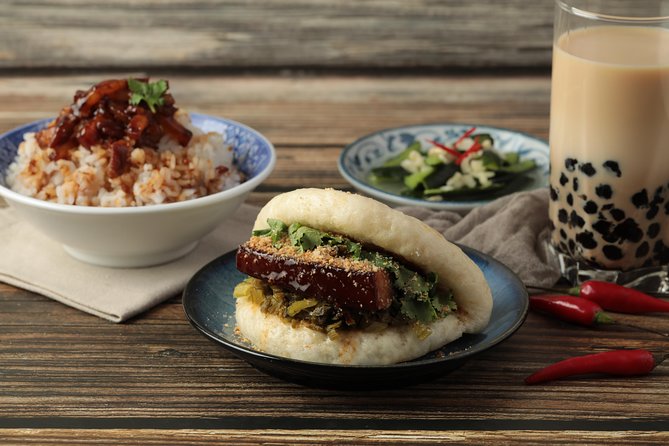
- Make gua bao from scratch: Learn to prepare the steamed buns and the braised pork belly that fills them.
- Try three Taiwanese favorites: The class covers gua bao, lu rou fan, and bubble milk tea.
- Shape your own boba: You make chewy tapioca pearls from scratch, one of the more unusual parts of the lesson.
- Keep the group small: No more than eight people attend, allowing for direct guidance.
- Eat what you prepare: The two-hour session finishes with a homemade Taiwanese meal.
- Take the recipes home: A recipe book gives you a practical souvenir for repeating the dishes later.
Why this class works better than another food tasting
Taipei makes it easy to eat well without cooking anything yourself. You can grab pork rice, buns, noodles, and tea from countless stalls. That is part of the fun, but a cooking class gives you something a food stop cannot: a clear look at how familiar flavors are built.
Here, you do not simply watch a chef assemble a snack. You handle the dough for gua bao, learn how pork belly becomes tender and savory, and make the tapioca pearls used in bubble tea. I find that useful because Taiwanese street food can seem simple when it arrives at the table. The class shows you the work behind that simplicity.
The focus is xiao chi, the Taiwanese idea of small eats. These are not formal restaurant dishes. They are everyday foods with strong links to markets, casual meals, and local habits. Gua bao is often described as a Taiwanese hamburger, though the comparison only goes so far. A soft steamed bun wraps braised pork belly, creating a rich, sweet and savory mouthful.
Lu rou fan takes the same general pork-centered comfort in another direction. Instead of a bun, the braised meat goes over rice. Bubble milk tea provides the sweet finish, with hand-shaped tapioca pearls adding the chewy texture that made the drink famous far beyond Taiwan.
More bubble tea sessions in Taipei:
- Xiao Long Bao, Beef Noodles & Boba Tea Cooking Class in Taipei
★ 5.0 · 159 reviews - Xiao Long Bao, Chicken vermicelli with mushroom and sesame oil, Tofu strips salad, Bubble milk tea. Taiwan Traditional Delicacies Experience-A (Taipei Cooking Class)
★ 5.0 · 79 reviews - Xiao Long Bao & Boba Tea Cooking Class in Taipei
★ 5.0 · 28 reviews
Arriving at CookInn Taiwan at 2:30 pm
The class meets at CookInn Taiwan’s Zhongshan classroom at 66 Section 1, Chengde Road, on the second floor, in Taipei’s Datong District. The start time is 2:30 pm, and the activity lasts about two hours.
That afternoon schedule fits neatly around a morning sightseeing plan. You can spend the first half of the day exploring Taipei, then arrive ready to cook and eat. Since the class ends at the same place where it begins, you do not need to arrange a separate ride or find your way to a second location afterward.
A mobile ticket is accepted, which keeps the arrival process simple. I would still allow enough time to locate the classroom and reach the second floor without rushing. The address is specific, but busy city streets can make a few extra minutes worthwhile.
The room is designed for a maximum of eight people. That number matters. A cooking lesson becomes frustrating when several people share one work surface or wait for the instructor to reach them. With eight or fewer, you have a better chance of getting help with dough, pork preparation, and boba shaping.
Making the soft bun for gua bao
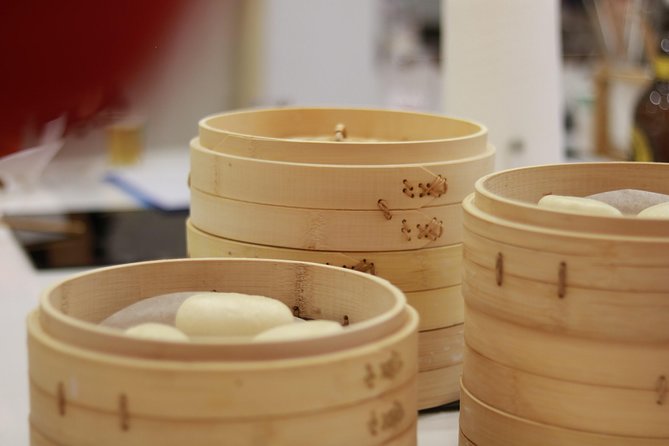
The gua bao section is likely to be the star of the class. You prepare the steamed bun itself rather than receiving a finished one and simply adding the filling.
Working with dough gives you a better sense of what makes gua bao different from ordinary bread. The bun needs to be soft and light enough to fold around the pork, but sturdy enough to hold its shape. The process also makes clear why freshly steamed buns have such a pleasant texture.
The pork belly is prepared with guidance on classic braising methods. This is where the class moves from dough technique to flavor building. Braised pork depends on time and seasoning, and the lesson explains the practical steps rather than treating the filling as a mystery.
One useful point is that you are learning a dish with two parts that can be repeated separately at home. You can make the buns for another filling, or prepare the pork for rice if you do not want to make dough on a particular day. That makes the recipe more useful than a one-off novelty.
The gua bao received the strongest praise in the supplied feedback. One participant found the boba process difficult but called the gua bao delicious, which is fair warning and useful guidance. If you have limited cooking experience, pay close attention during the bun and pork stages. Those are the techniques most likely to reward careful practice.
Understanding lu rou fan over rice
The class also covers lu rou fan, a Taiwanese comfort food built around braised pork served over rice. The recipe connects closely with the gua bao filling, so you can compare how the same style of pork works with a steamed bun and with rice.
The rice itself is prepared in advance according to one account of the class, while the focus stays on the pork. That keeps the lesson within its two-hour limit and puts your effort where it matters most. You still get to taste the full dish, but the class does not spend valuable time on a basic rice-cooking demonstration.
I like this pairing because it gives you more than one meal from the same culinary idea. Gua bao feels portable and snack-like. Lu rou fan is more of a bowl meal. Together, they show how Taiwanese cooking moves between street food and everyday home-style eating.
Do not expect a long menu of unrelated dishes. This is a focused lesson built around a few well-known foods. That is a strength if you want to learn the methods properly. It may feel limited if you prefer a broad survey of Taiwanese cuisine.
More food tours in Taipei:
- The Award-Winning Private Food Tour of Taipei: The 10 Tastings
★ 5.0 · 716 reviews - Taipei: Food Tours w/ Top 10 Taiwan Food (Breakfast/Dinner)
★ 4.7 · 517 reviews - Taipei: Private Food Tour – 10 Tastings with Locals
★ 4.9 · 218 reviews - Taipei: Street Food & Hidden Eats Night Market Food Tour
★ 4.8 · 112 reviews
Shaping tapioca pearls for bubble milk tea
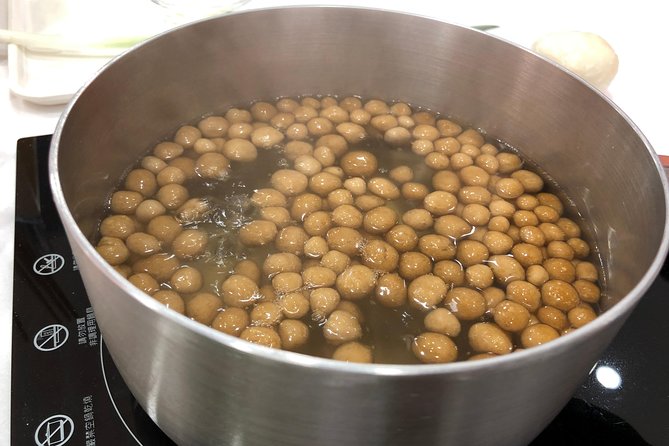
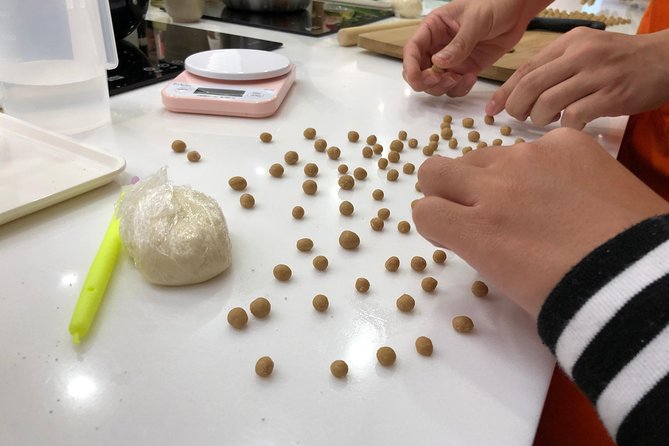
The boba portion is the class’s most distinctive activity. You make chewy tapioca pearls from scratch, then prepare and shake your own cup of bubble milk tea.
This is not just a drink-making stop. The tapioca process takes patience and a little coordination. One piece of feedback calls it an amazing process but also a very hard one. That makes sense: shaping pearls that cook with the right texture is less simple than dropping ready-made balls into a cup.
I would approach this part with curiosity rather than perfectionism. Uneven pearls or a few imperfect pieces are part of learning. You will still understand how the drink comes together, and the effort makes the final cup more satisfying.
For children, this section can be especially engaging because it involves direct work with the ingredients. At the same time, the class is not a passive craft activity. The instructor needs to guide several stages, and younger children may need an adult’s help. The class has worked well for families with children aged 8, 10, and 11, with the teacher involving them in the cooking.
Bubble tea has become a worldwide favorite, but making the pearls from scratch gives the drink a specifically Taiwanese context. You are not simply ordering a fashionable beverage. You are learning one of the country’s best-known modern food exports from the inside.
The instructor and the value of personal help
Angela is named as an instructor for the class, and the feedback describes her as friendly, capable, patient, and clear when explaining the recipes. Those qualities matter more in a cooking lesson than a polished speech. You need someone who can spot a dough problem, explain a braising step again, and keep the group moving.
A group of three has also been described as a comfortable setting, while the official maximum is eight. That range gives you a reasonable expectation: the experience should feel personal, but it is still a shared class rather than a private lesson.
The instructor’s role is especially important during the boba stage. Dough and braised pork are familiar enough to follow with ordinary cooking sense. Tapioca pearls are less forgiving, and clear demonstrations can save you from a sticky mess.
The class also suits mixed-age groups. Children can take part in shaping, mixing, and assembling rather than sitting on the sidelines. Still, adults should expect to remain involved. This is a real cooking lesson, not a drop-off activity.
Sitting down to eat what you made
The final meal is a major part of the value. After preparing the dishes, you sit down and eat gua bao, lu rou fan, and bubble milk tea. The meal gives you an immediate test of what you learned.
I like this finish because cooking classes can sometimes end just as the interesting part begins. Here, the food you prepare becomes lunch or an afternoon meal, and you can compare the dishes while the techniques are still fresh in your mind.
Come hungry. The class describes the food as a meal rather than a token tasting, and the afternoon timing makes it suitable as a late lunch. If you have eaten a large meal shortly before 2:30 pm, you may not have much appetite by the end.
The shared meal also gives you time to think about the differences between the dishes. The bun is soft and handheld, the rice dish is warm and filling, and the tea brings sweetness and chew. That combination gives you a compact introduction to Taiwanese everyday food.
Is $79 a fair price?
At $79 per person, this is not the cheapest way to eat street food in Taipei. A market meal costs far less, and you can try several dishes without paying for a class.
The price makes more sense when you count what is included in the activity itself: about two hours of instruction, a small group, several recipes, hands-on preparation, a full meal, and a recipe book. You are paying for food plus access to a teacher and a kitchen-based lesson.
The recipe book improves the value because it gives the class a second life. Without it, you might remember the general idea but forget the ratios or order of the steps. With the recipes, you have a better chance of making gua bao, lu rou fan, or boba again at home.
I would consider the cost reasonable for someone who wants participation rather than simple eating. It is less attractive if your only goal is to sample as many foods as possible on a tight budget. In that case, Taipei’s markets offer more variety for less money.
Who should book this two-hour lesson?
This class fits food-focused visitors who want to understand what they are eating. It also works well for couples, small friend groups, and families with older children who can follow instructions and take part in kitchen tasks.
It is a good rainy-day plan, a useful break from sightseeing, and a smart choice if you want an activity with something tangible to take home. The recipe book gives you a practical souvenir, and the skills are more memorable than another small purchase.
You may want to skip it if you dislike group cooking, do not want to handle dough, or prefer a fast food crawl. The boba work can be challenging, and the class spends its full two hours on a small selection of dishes rather than covering all of Taiwanese cuisine.
Free cancellation is available if you cancel at least 24 hours before the 2:30 pm start time. Changes or cancellations made inside that window are not accepted for a refund. The class also requires a minimum number of participants, so a cancellation by the provider would result in another date or experience, or a full refund.
Should you book CookInn Taiwan’s street-food class?
Book it if you want to leave Taipei with more than a list of foods you tasted. The gua bao lesson, the braised pork, and the homemade boba give you three distinct skills, while the small group keeps the session personal.
I would book this especially for a family with children aged around eight and older, a couple looking for a hands-on afternoon, or a food lover who wants recipes to repeat at home. Go in expecting the boba pearls to require patience, and come hungry for the meal at the end.
Skip it only if your priority is the lowest-cost meal or the widest possible range of dishes. For a focused, friendly introduction to Taiwanese street food, $79 buys a useful afternoon, a full plate, and techniques you can carry home.
FAQ
How long does the cooking class last?
The class lasts approximately two hours.
What time does the class begin?
The class begins at 2:30 pm.
Where does the class meet?
It meets at CookInn Taiwan’s Zhongshan classroom at 66 Section 1, Chengde Road, second floor, in Datong District, Taipei.
Where does the activity end?
The activity ends back at the meeting point.
What dishes will I make?
You will learn to make gua bao, braised pork, lu rou fan, bubble milk tea, and chewy tapioca pearls from scratch. The gua bao buns are prepared during the class.
How many people can join the class?
The class has a maximum of eight travelers.
Can I cancel for a full refund?
Yes. You can cancel at least 24 hours before the local start time for a full refund. Cancellations or changes made less than 24 hours before the start are not accepted for a refund.
More Hands-On Classes in Taipei
- Wear Hanfu and play guzheng
★ 5.0 · 19 reviews - Taipei Calligraphy Workshop (DIY incl.)
★ 5.0 · 19 reviews - Taipei: Cooking Class & Market Adventure Historic Dadaocheng
★ 4.9 · 17 reviews - Taiwanese Food Culture and Cooking Class
★ 5.0 · 16 reviews
More Cooking Classes in Taipei
- Taipei Cooking Class & Market Adventure in Historic Dadaocheng
★ 5.0 · 77 reviews - Xiao Long Bao, Pork thick soup, Bubble milk tea. Taiwan Traditional Light Meals Experience-B (Taipei Cooking Class)
★ 5.0 · 24 reviews - Xiao long bao, Pork thick soup, Bubble milk tea. (Taiwan Cooking Class)-B
★ 5.0 · 18 reviews - Taiwanese Gourmet Cooking Class in Taipei
★ 5.0 · 18 reviews
Just added around Taipei
- Taipei: 8 Hours Private Day Tour in Wulai with Benz Vito★ 4.4 · 5 reviews
- Vintage Taipei – Best of Taiwan and Sunset Walking Tour★ 5.0 · 4 reviews
- Yilan 1-Day Private Tour to Kavalan Whisky & Cultural Gems★ 4.5 · 3 reviews
- Private Yangmingshan National Park Hiking Day Tour from Taipei★ 5.0 · 5 reviews
- Two-day Sun Moon Lake & Alishan Forest Park Tour Package★ 4.0 · 5 reviews
- Keelung Shore Excursion: Private 6H Natural Wonder & Seafood Tour★ 5.0 · 3 reviews
- Xiao Long Bao, Chicken vermicelli with mushroom and sesame oil, Tofu strips salad, Bubble milk tea. Taiwan Traditional Delicacies Experience-A (Taipei Cooking Class)★ 5.0 · 8 reviews
- Best of Taiwan 9 Days Tour★ 3.5 · 3 reviews
Taiwanese Food Tours, compared.
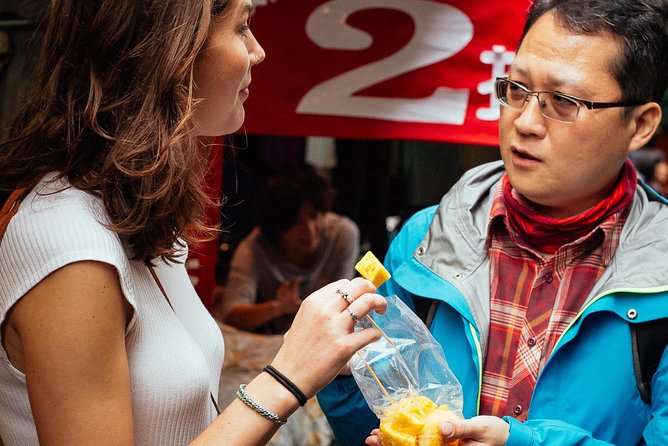
The Award-Winning Private Food Tour of Taipei: The 10 Tastings
Read our review →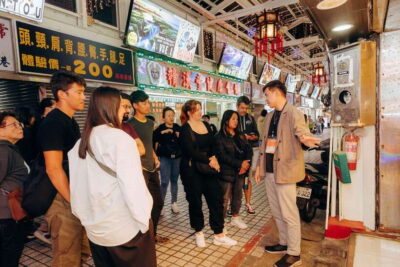
Food Tours w/ Top 10 Taiwan Food (Breakfast/Dinner)
Read our review →
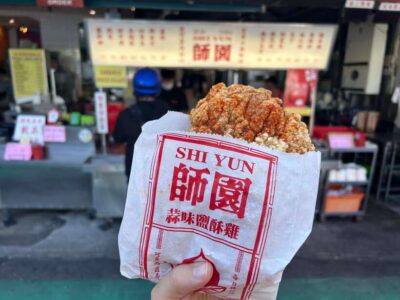
Street Food & Hidden Eats Night Market Food Tour
Read our review →
Taipei Hidden Eats, Market & Street Food Tour with 8+ Tastings
Read our review →
Taipei Food Tour: Night Market & Convenience Store(Food Included)
Read our review →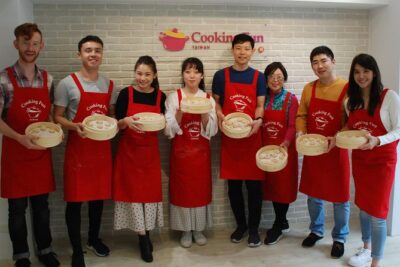
Browse the lists this tour appears in